


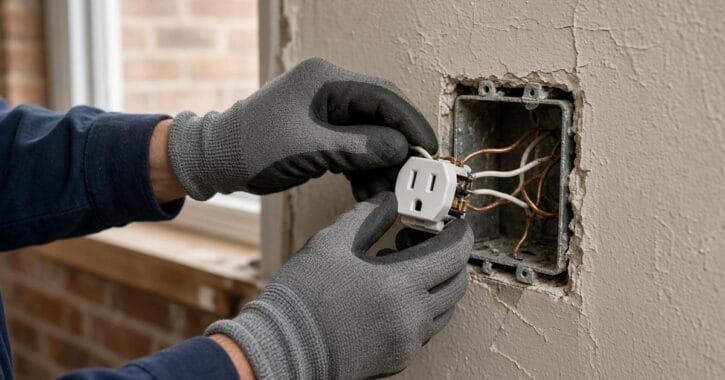
Two prong outlet replacement is one of the most common upgrade requests in older Chicago homes. Ungrounded receptacles lack the round ground slot modern electronics expect. Adapters and three-prong cheater plugs do not create a real ground path. Homeowners need a clear plan: targeted rewiring, circuit-level grounding, or code-approved GFCI protection where rewiring is impractical.
This guide explains what two prong outlets mean for safety, how Chicago homes typically got here, and when each upgrade path makes sense. For full-home solutions, see safe home rewiring. For single-circuit help, start with electrical repair service.
Why Two Prong Outlets Exist
Homes built before the 1960s often used two wire branch circuits: hot and neutral, no equipment ground wire. At the time, loads were mostly lights and small appliances. Modern devices with three prong cords expect grounding for surge paths and metal chassis safety.
Simply swapping a two prong faceplate for a three prong device without a ground wire is a code violation unless another approved method applies. The third slot would be a false sense of security.
Older wiring systems may include cloth jacketed cable or mixed generations of repairs. Condition matters as much as outlet shape. Our article on cloth wiring safety covers insulation aging that often appears in the same homes.
Safety Risks of Ungrounded Outlets
Warm plugs, discoloration, or a burning smell need immediate attention. See our guide on warm outlets and burning smells. Without grounding, fault current has no low-resistance path to trip breakers quickly on metal appliances. Surge protectors on two prong outlets cannot shunt spikes to ground effectively. Faulty appliances can energize metal housings.
GFCI devices measure current imbalance and can protect people from shock even without a ground, but they do not provide equipment grounding for surge strips. Understanding that distinction drives good decisions on kitchen, bath, and office circuits.
Option 1: Rewire and Install Grounded Outlets
The most complete fix runs new cable with hot, neutral, and ground from the panel or a grounded junction point to each outlet. This path supports modern electronics, AFCI and GFCI requirements, and future load like home office gear.
Rewiring cost rises when walls are plaster, when basements are finished, or when knob-and-tube segments must be isolated. Permits and inspection are part of professional work in Chicago. Partial rewiring of high-use rooms first is a common phased plan.
Option 2: GFCI Protection Without Full Rewire
National electrical code allows GFCI protection as a substitute for grounding on existing two wire branch circuits in many retrofit cases. A GFCI breaker or GFCI receptacle with proper labeling can protect downstream outlets on the same circuit.
Labels must state “No equipment ground.” This is a recognized safety upgrade, not a full grounding solution. It fits rental units and budget-phased projects when walls stay closed.
Wet locations still need thoughtful placement. Review outlets near water sources for kitchen, bath, and laundry rules beyond the basic GFCI swap.
Option 3: Selected Circuit Upgrades
Many homeowners prioritize kitchen countertops, bathroom vanities, home offices with computers, and laundry areas. Replacing two prong outlets only in low-risk bedrooms while rewiring active workspaces balances cost and daily safety.
Adding a new grounded circuit from the panel for a microwave or window AC is sometimes cheaper than fishing wire through every box on an old branch.
What Not to Do
Do not use cheater plugs as permanent fixes. Do not bond neutral to ground at the outlet to fake a ground path. Do not install three prong outlets on ungrounded wire without GFCI protection where permitted. Do not perform panel or meter work yourself.
Bootleg grounds fool testers and create dangerous current paths on metal plumbing or gas lines in old buildings.
Chicago Code and Permit Notes
City of Chicago and many Cook County suburbs require permits for rewiring and new circuit installation. Landlords must maintain habitable electrical systems. Condo associations may require contractor COI and board approval for in-unit work that touches common risers.
Inspection validates box fill, wire size, breaker pairing, and GFCI or AFCI placement. Professional documentation helps at sale and for insurance questionnaires about ungrounded wiring.
How to Plan Your Project
Start with a circuit map: which rooms share branches, which outlets are two prong, and where you need grounded circuits for appliances. An electrician tests for grounded metal boxes that might allow grounding-type devices via metal armored cable in some layouts.
Combine outlet replacement with panel evaluation if breakers are full or obsolete. Phasing rewiring with whole-home rewiring plans avoids opening walls twice.
Match outlet replacement strategy to how each room is used. Home offices with printers and monitors benefit from grounded circuits and dedicated surge paths. Bedrooms with only lamps may rank lower if budget requires phasing. Kitchens, baths, and laundry rooms should lead almost every priority list because of water proximity and appliance load.
Test existing circuits before finishing walls in a remodel. Opening a kitchen backsplash is the right time to replace two prong boxes on the same branch, not after tile is reset. Contractors who are not electricians should not guess at grounding paths behind cabinets.
Document GFCI labeled retrofits for the next buyer. Keep permit cards and inspection approvals with closing packets. Clear records prevent last-minute scramble when a lender asks about ungrounded wiring days before closing.
Chicago two-flats sometimes share a single meter with unclear circuit maps. Before replacing outlets in one unit, confirm which panel feeds which rooms so you do not leave a neighbor circuit mislabeled. Licensed electricians trace branches with proper testing rather than guessing from outlet location alone.
FAQ: Two Prong Replacement
Can I replace two prong outlets myself?
Only if you understand code paths for GFCI labeling or confirmed grounding. Most homeowners misidentify ground paths. Licensed work reduces fire and shock risk.
Will home inspectors fail two prong outlets?
Inspectors often note ungrounded outlets. GFCI upgrades with labels may satisfy many concerns, but lenders and insurers vary.
Is GFCI enough for a computer desk?
GFCI protects people. Sensitive electronics still benefit from true grounding and quality surge protection on a grounded circuit.
How long does rewiring take?
Single rooms may take a day. Whole homes span weeks depending on access, plaster repair, and permit inspections.
Does aluminum wiring change the plan?
Yes. Aluminum branch circuits need compatible devices and often pigtailing. That is separate from simple two prong upgrades but may appear in the same vintage homes.
Work With STS Electric
STS Electric helps Chicago homeowners choose grounded rewiring, GFCI retrofit, or phased upgrades that match budget and occupancy. Call (773) 721-1111 or visit us at 939 W North Ave #746 to schedule two prong outlet replacement and circuit evaluation.




