


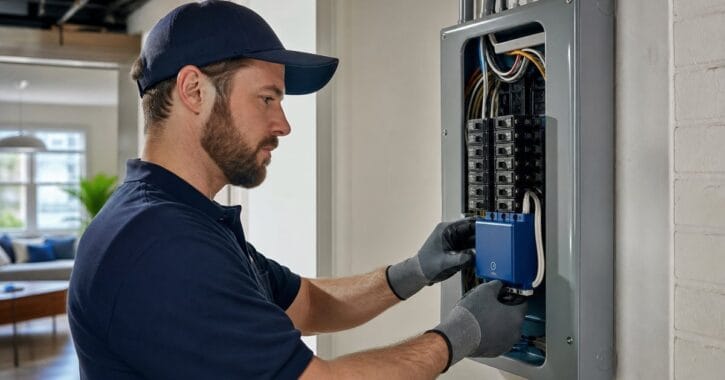
Surge protectors are easy to find at hardware stores, but the labels can be confusing. Power strips with surge protection only guard what is plugged into them. A whole-home surge protector installed at your electrical panel reduces voltage spikes across the entire service before they spread to outlets, hardwired appliances, and low-voltage systems. This guide helps you decide whether panel-level protection makes sense for your home, when strips are enough, and when to call a licensed electrician.
Strip Surge Protectors vs Whole-Home Protection
Point-of-use surge strips and battery backup units protect devices plugged directly into them. They are useful at a desk, TV stand, or home office where you want local protection and easy replacement. They do not stop surges from reaching your HVAC control board, refrigerator, washer, garage door opener, or hardwired smoke detectors on other circuits.
A whole-home surge protective device (SPD) mounts at the panel or service entrance. It clamps or redirects excess voltage for the whole house. Think of it as a gate at the driveway rather than a lock on each bedroom door. Most homeowners who want broad coverage use both: panel-level SPD plus strips on sensitive electronics.
If you already know you want installation, see our Chicago service page for whole-house surge protector installation. This article focuses on the decision, not the install steps.
Where Power Surges Come From
Surges are brief voltage increases above normal line levels. They vary in size and source.
Utility and storm-related surges
Utility switching, grid faults, and lightning strikes on nearby lines can send spikes down the service entrance. Chicago sees thunderstorms, high winds, and occasional ice events that stress overhead lines. You do not need a direct strike on your roof for a surge to enter through the power feed. Neighbors on the same transformer can share events too.
In-home surges
Large motors cycling on and off can create smaller repeated surges. Examples include AC compressors, sump pumps, and shop equipment. These may not destroy a TV in one hit, but they can wear down electronics over years. Adding an EV charger, hot tub, or workshop subpanel increases the mix of loads on your service.
When Point-of-Use Protection Is Enough
You may rely primarily on strips if most of the following are true:
Your home has modest electronics value and few hardwired smart devices. You rent and cannot alter the panel. Your landlord maintains the building electrical system and you only protect a laptop and router. You live in a newer high-rise where building management handles service equipment and you have limited exposure to direct strikes.
Even in these cases, use quality surge strips with clamping voltage ratings from known brands, and replace them after major storms or if the protection indicator goes out. Strips do not last forever.
Apartment dwellers with limited plug-in gear may postpone whole-home SPD until they buy. Document the building electrical maintenance with your landlord if you rely on their insurance for building systems.
When a Whole-Home Surge Protector Is Worth It
Consider panel-level protection when one or more of these apply:
You own the home and plan to stay. Installation cost is easier to justify when you protect built-in appliances and systems you cannot plug into a strip.
You have added or plan to add an EV charger. Chargers combine steady load with sensitive electronics. Pair charger planning with panel review and surge strategy. Our EV charging station service includes load calculations and safety checks.
You run a generator or transfer switch. Utility power restoration after an outage can produce surges. Homes with backup power should discuss layered protection with the electrician who handles emergency power systems.
You have a home office, AV room, or smart home hub. Replacing gear after a single event often costs more than installing an SPD at the panel.
Your panel is due for other work. If you are already upgrading breakers, adding circuits, or replacing an old panel, adding an SPD in the same visit saves labor. Read about electrical panel condition and upgrade timing.
Signs You Should Call an Electrician Soon
Some situations call for a site visit rather than a DIY purchase:
Flickering lights during storms paired with damaged electronics. Repeated GFCI or breaker trips after weather events. Unknown panel age with no grounding visible. Plans for a service upgrade, solar interconnect, or generator without a surge plan. Burning smell, buzzing, or heat at the panel. Any of these warrant professional diagnosis through our electrical repair service before you add protection on top of an underlying fault.
STS Electric technicians assess grounding, bonding, and available breaker spaces before recommending Type 1 or Type 2 devices. We explain whether your home needs protection only at the panel or a broader service entrance strategy.
Common Questions Homeowners Ask
Will a whole-home SPD stop every surge?
No single device guarantees zero damage from a direct lightning strike or catastrophic grid fault. Layered protection improves odds: SPD at the panel, strips at sensitive loads, and proper grounding throughout the home.
Do I still need power strips?
Yes, for fine electronics you want to shield twice. The whole-home unit handles the big hits; strips handle what gets through plus local noise on long circuit runs.
How do I know when the SPD wears out?
Most whole-house units have status lights or displays. Check them after storms. Your installer should show you what normal looks like. Replacement modules are available for many models without replacing the entire panel.
Does renters insurance cover surge damage?
Policies vary. Documenting that the building has panel protection can support claims conversations, but renters should still use strips on personal electronics the landlord does not insure.
Can I install an SPD myself?
Working inside a service panel exposes you to lethal voltage even when breakers are off. Chicago requires licensed work for most panel modifications. Mistakes can void equipment warranties and create fire paths. Professional install includes correct torque, bonding checks, and permit compliance when required.
Chicago Weather and Real-World Risk
Summer thunderstorms and winter ice loading on overhead lines both stress the grid. You do not need to live in a high-rise to see utility-side events. Two-flats and single-family homes on shared transformers can experience simultaneous appliance failures after a line fault. Whole-home protection is less about fear and more about reducing predictable wear on modern electronics.
If you recently lost devices during a storm while neighbors on the same block had similar damage, that pattern is worth discussing during a panel visit. We compare your grounding, surge history, and planned loads before recommending device type and placement.
Next Step: Get a Clear Answer for Your Home
If you are on the fence, a short panel review often settles the question. We look at service size, surge history, planned loads, and panel condition, then recommend whether whole-home protection, strips only, or a combined approach fits your budget and risk.
STS Electric is licensed for Chicago electrical work at 939 W North Ave #746, Chicago, IL 60642. Call (773) 721-1111 to talk through your situation or schedule installation through our whole-house surge protector Chicago page when you are ready to move forward.




