


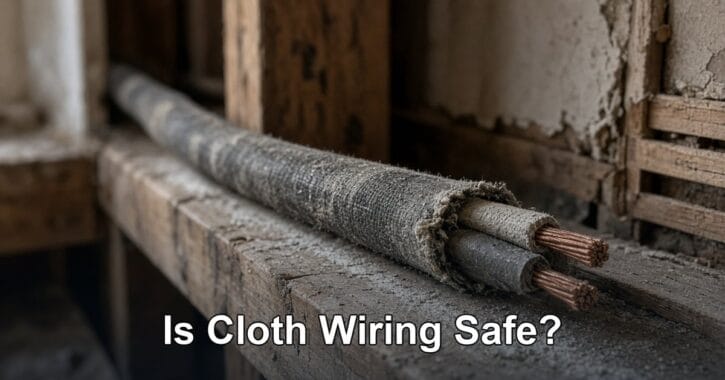
Is cloth wiring safe is a common question in Chicago bungalows, two-flats, and courtyard buildings. Cloth-jacketed nonmetallic cable was standard for decades. Age, insulation brittleness, amateur splices, and overheating change the answer from “usually fine” to “plan rewiring soon.”
This article focuses on cloth and early rubber insulated NM cable, not knob-and-tube or aluminum branch wiring, which deserve their own evaluations. How cloth NM fits into other wiring eras is covered in our electrical wiring guide. When inspection points to replacement, safe home rewiring walks through scoped and phased plans.
What Cloth Wiring Looks Like
Older NM cable used a fabric outer jacket with rubber or early thermoplastic insulation around conductors. You may see black or gray cloth in basements, attics, and wall openings. Copper conductors are common in postwar installs; some prewar branches differ.
Cloth wiring is not automatically illegal. Many circuits still operate if insulation is intact and connections are modern. Problems appear when jackets crumble, when wires were nicked during past renovations, or when devices were updated without proper terminations.
When Cloth Wiring Is Lower Risk
Lower risk situations include intact jacket, no evidence of overheating, proper breakers matching wire gauge, grounded or GFCI protected outlets where required, and no history of chronic tripping or warm devices. Infrequently used lighting circuits in dry locations fare better than kitchen circuits pulling daily load.
Professional inspection still matters before major remodels or appliance adds. Opening walls without knowing wire condition invites accidental damage to brittle insulation.
Warning Signs That Safety Is Degrading
Crumbly cloth falling off in the basement, exposed conductors, scorch marks on insulation, buzzing switches, warm outlets, burning smell, and breakers that trip without clear cause all warrant immediate evaluation. Insurance photos often show brittle cable near hot water pipes or recessed lights that overheat nearby jackets.
Hidden splices in junction boxes without covers are common in older Chicago attics. Each undocumented splice is a fire risk when cloth insulation cracks at the bend.
Insurance and Home Sale Inspection Flags
Some insurers ask about wiring type and age during underwriting. They may require inspection letters or remediation for damaged cloth, ungrounded outlets, or missing AFCI or GFCI where modern code applies to work being performed.
Buyers should not assume passing general inspection means full rewiring is unnecessary. Inspectors may note cloth wiring for awareness without demanding replacement unless damage is visible. A dedicated electrical inspection clarifies priority.
Schedule home electrical inspection in Chicago before purchase or after noticing symptoms.
Repair vs Partial Rewire vs Full Rewire
Spot repairs suit isolated damage when the rest of the branch is sound: new cable from a junction to a kitchen, replacement of a compromised segment in an accessible basement run. Partial rewire targets high-risk rooms first.
Full rewire replaces branch circuits back to the panel, often paired with panel upgrades and grounded outlets. Phasing by floor or by occupancy reduces disruption in owner-occupied homes.
Masking tape repairs and unlisted connectors on cloth wire are not acceptable fixes. Proper boxes, listed devices, and torque-rated connections are required.
Relationship to Two Prong Outlets and Panel Age
Cloth wiring often appears in homes with two prong outlets and limited grounding. GFCI retrofit can improve shock protection on some circuits but does not rejuvenate brittle insulation. Panel age and spare capacity may limit how many new circuits you can add without service work.
If you upgrade outlets, evaluate wire condition at the same time. Swapping devices on crumbling wire hides the real hazard inside the box.
What Homeowners Should Not Do
Do not disturb cloth wiring without shutting off the circuit and verifying dead. Do not wrap damaged sections with electrical tape as a permanent repair. Do not increase breaker size when lights dim. Do not open energized panels to trace old circuits without training.
DIY attic discoveries should pause until a map exists. Moving one brittle branch can crack insulation elsewhere.
Professional Evaluation Process
Electricians inspect accessible runs, sample outlet boxes, test insulation resistance where appropriate, and review panel labeling. Infrared scans and load tests sometimes supplement visual checks in larger homes.
You receive a prioritized plan: monitor, spot repair, phased rewire, or full rewire with permit timeline. Remediation documentation helps insurance and resale.
Chicago Housing Stock Notes
Plaster walls make fishing new wire harder than in frame suburbs. Basements with low clearance often hold the clearest view of cloth condition. Shared conduit in two-flats may mix eras of wiring between units.
Landlords have duty of care to tenants. Deferred cloth wiring maintenance becomes liability when heat events occur.
Attic storage compresses cloth cable over joists. Homeowners who lay plywood floors over old runs sometimes nail through jackets they never saw. Check attic pathways before major storage projects or hatch upgrades.
Remodeling triggers should include wiring review: kitchen gut jobs, bathroom expansions, and adding dormers all disturb paths that stayed dormant for decades. Pair cloth evaluation with outlet upgrades on the same branch when walls are open.
If you also have ungrounded two prong devices on cloth circuits, read our guide on two prong outlet replacement for grounding and GFCI options that match insulation condition.
Moisture in masonry walls degrades cloth faster than dry interior runs. Basements with periodic seepage deserve closer inspection even when upper floors look untouched. Document findings with photos for insurance files.
When cloth wiring runs through fire blocking in old frame walls, fishing replacement cable may require opening more wall area than planned. Budget time for plaster repair and finish matching so rewiring does not leave obvious patch squares at closing photos or schedule work alongside other renovations so you pay for access once instead of twice.
FAQ: Cloth Wiring Safety
Does all cloth wiring need immediate replacement?
No. Condition and usage matter. Damaged or overheating circuits need prompt action.
Is cloth wiring the same as knob-and-tube?
No. They are different systems with different rules. This article does not cover knob-and-tube as the primary topic.
Will GFCI outlets make cloth wiring safe?
GFCI helps protect people from shock on ungrounded circuits. It does not fix brittle insulation or overload.
How much does rewiring cost?
Cost varies by access, room count, and panel work. Inspection and scoped quote come before major demolition.
Can I get insurance if I have cloth wiring?
Many carriers insure older homes with satisfactory inspection. Policies vary. Ask your agent with photos and electrician letters ready.
Talk to STS Electric About Your Wiring
Cloth wiring deserves honest assessment, not fear-based upselling. STS Electric inspects, prioritizes, and rewires Chicago homes from 939 W North Ave #746. Call (773) 721-1111 to schedule wiring evaluation or phased rewire planning.




