


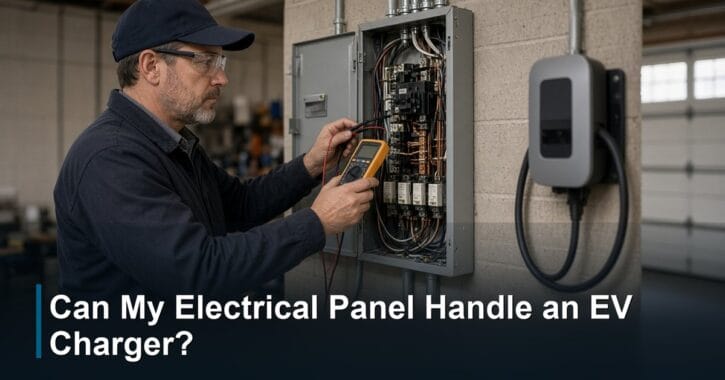
Can my panel handle an EV charger is the right question before you buy a Level 2 unit or schedule installation. EV charging adds continuous load for hours, unlike most appliances that cycle. A panel that works today for cooking and AC may not have safe spare capacity for a 32 or 48 amp charger without upgrades or load management.
This article explains how electricians evaluate capacity, what numbers matter, and when a service upgrade enters the picture. It supports, not replaces, our installation services on electric vehicle charging stations and EV charger installation in Chicago.
Why EV Load Is Different
A Level 2 charger typically draws 240 volts at 16 to 48 amps for long sessions. That is roughly 3.8 to 11.5 kW sustained. Compare that to an electric dryer that runs intermittently or a range that cycles burners. Utilities and panels experience EV load as a steady demand that can last all night.
Electricians use load calculations per NEC standards, not guesswork from main breaker size alone. A 200 amp main does not mean 200 amps are free. Existing heat, air conditioning, water heaters, and subpanels all consume the budget.
Quick Signs Your Panel May Be Tight
Frequent breaker trips when major appliances overlap, a panel already full of tandem breakers, 100 amp service in a large single-family home, fused mains, or legacy brands with limited breaker availability all suggest careful study before adding a 40 or 50 amp EV circuit.
Warm breakers, buzzing at the panel, or prior unpermitted basement finishes on shared circuits are stop-and-evaluate flags. Review electrical panels for replacement context if the enclosure itself is obsolete.
Load Calculation Basics
A standard residential load calc accounts for general lighting, small appliance circuits, fixed appliances, HVAC, and demand factors. The goal is to determine whether adding an EV charger exceeds safe service capacity after diversity credits.
Homes with gas heat and gas water heaters often have more headroom than all-electric properties. Dual fuel or heat pump conversions change the picture. EV charging plus induction cooking plus tankless electric hot water on 100 amp service commonly requires upgrade.
Only a licensed electrician should run the official calc for permit purposes. Online amp calculators are educational, not approval.
Spare Capacity vs New Circuit
Sometimes an open breaker space and adequate service capacity allow a dedicated 240 volt circuit with correct wire gauge and breaker pairing. A 40 amp circuit needs appropriate cable and a NEMA 14-50 or hardwired charger connection per manufacturer specs.
When spaces are full but service amperage is fine, a subpanel or panel replacement may be needed before any EV wire runs. When amperage is insufficient, electrical service upgrade coordinates utility work, meter socket, and main breaker sizing.
Load Management and Smart Chargers
Some chargers and energy management systems throttle EV draw when the house approaches its limit. These help on borderline panels but do not fix undersized service or failing equipment. Management is a tool, not a bypass for a 60 amp main feeding a 3000 square foot all-electric home.
Chicago winters add concurrent load from space heat and block heaters. Summer adds AC. Planning assumes realistic overlap, not best-case seasons.
Installation Path After Capacity Is Confirmed
Once capacity is verified, installation selects circuit route, outdoor or garage placement, disconnect requirements, and permit inspection. Condo and HOA properties may need architectural approval separate from electrical code.
Hardwired wall connectors vs plug-in units affect code details. Surge and grounding must meet manufacturer and local amendments. Our EV team handles charger placement after panel approval.
When Service Upgrade Is the Right Answer
Upgrade paths include moving from 100 to 200 amp service, replacing obsolete panels, upgrading meter equipment, and coordinating ComEd or local utility schedules. Timelines vary by utility backlog and weather.
Combining service upgrade with EV prep avoids double mobilization. If you plan induction range or heat pump later, say so during calc so the service size fits future load.
Chicago-Specific Considerations
Dense neighborhoods may have overhead feeds with limited upgrade paths. Garages behind alleys sometimes need long homeruns. Permits through the City of Chicago or suburban AHJs are standard for new circuits and service changes.
Landlords installing chargers for tenants must clarify metering and who pays for energy. Two-flats may share one meter, which complicates fair allocation.
Future vehicle changes matter. A plug-in hybrid today may become a second full EV in a few years. Size the circuit and service headroom for the household plan, not only the single car in the driveway this month.
Garage subpanels are common in Chicago alleys. An EV circuit might land in the garage panel while capacity is actually constrained at the main in the basement. Electricians trace the full path from utility feed to charger location before approving a 40 or 50 amp breaker.
Permit inspectors verify wire type, conduit fill, disconnect labeling, and breaker pairing. Skipping calc documentation to save a day often costs more when inspection fails and walls must reopen.
Utility time-of-use rates may steer charging hours after your capacity check passes. Scheduling charging overnight reduces overlap with cooking and HVAC peaks. Smart chargers report draw so you can confirm real-world use stays within the calculated budget.
Condo garages and deeded parking spots add another layer. Shared feeders and unclear labeling are common in older Chicago parking structures: the feeder to your space may not match the main house calc. HOA documents sometimes restrict charger placement or require engineer letters. Bring those requirements to your site visit so capacity work includes the full path to the parking spot.
FAQ: Panel Capacity and EV Charging
Can I just look at my main breaker number?
No. Main breaker rating is an upper cap, not available spare amperage.
Is a 50 amp charger always better?
Only if your panel, wire, and vehicle accept it. Oversizing without capacity wastes money and can overload service.
Will ComEd upgrade my panel?
Utilities maintain service to the meter. Panel and load-side work is homeowner scope through licensed electricians.
How long does upgrade plus install take?
Simple circuit adds may finish in a day. Service upgrades can take weeks including utility coordination.
Can I use an extension cord for Level 2?
No. Level 2 requires permanent wiring on a dedicated circuit sized for continuous load.
Schedule a Capacity Check With STS Electric
Before you order hardware, get a load calculation and panel inspection. STS Electric serves Chicago from 939 W North Ave #746. Call (773) 721-1111 to schedule EV readiness assessment and charger installation planning.




