


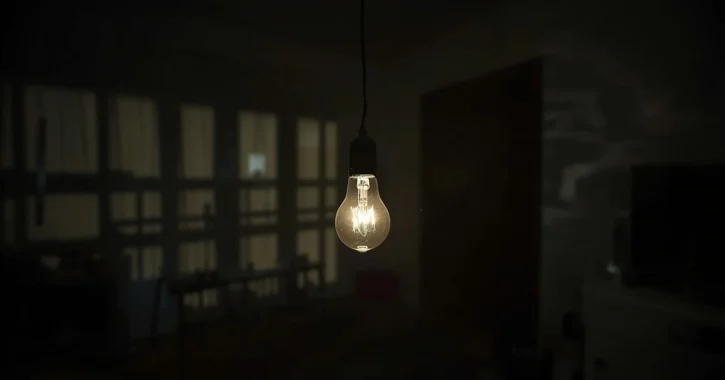
Homeowners ask why do the lights in my house dim when a dryer starts, when the air conditioner kicks on, or for no clear reason. A brief dip on one circuit when a motor starts can be normal voltage drop. House-wide dimming, lights that stay dim, or lights that get brighter in one room while they fade in another, points to a wiring, panel, or service problem that needs testing.
STS Electric diagnoses house-wide dimming in Chicago bungalows, two-flats, and small apartment buildings. Licensed work is dispatched from 939 W North Ave #746. Call (773) 721-1111.
This page covers voltage drop and whole-house brightness changes. Rapid on-off strobing belongs on flickering lights in home. LED lamps that only fade on a dimmer belong on dimming LED lights.
How House Voltage Reaches Your Lights
Power enters through a service cable to the meter, then to the main panel. Branch circuits feed rooms and appliances. Lights follow the voltage on that path. When voltage falls, lamps look dim. When voltage rises, they look brighter. Incandescent and halogen bulbs show this first. LEDs can hide a small dip or flash instead.
A small change inside the utility range is common. You notice it when several rooms change at once, when motors get quieter at the same moment, or when the change keeps repeating.
One Room, Whole House, or ComEd
The pattern tells you where to start. It does not replace a meter reading.
- One fixture only: try a new lamp first. If it is an LED on a dimmer, see the LED dimming guide.
- One room or one breaker: look at that circuit, the breaker, and shared connections. Overloaded circuits and a weak breaker are common here.
- Several rooms at the same time: the panel, the service cable, the meter, or a loose neutral is more likely than several bad bulbs.
- Neighbors see the same dips: call ComEd and report a voltage or flicker complaint. Ask them to check the transformer and the line to the meter.
- Only your house: call an electrician. ComEd can log the meter and still miss a load-side fault.
If you also smell burning, hear buzzing, or feel a warm panel, treat it as urgent on 24/7 emergency electrical service.
Common Causes of House Lights Dimming
Large appliances starting
Air conditioners, refrigerators, well or sump pumps, washers, and dryers draw extra current for a moment at start. Lights on the same circuit, or on a small service, can dip and then recover. That brief dip is common.
It is not common for lights to stay dim while the appliance runs, to pulse over and over, or to change in rooms that do not share that load. Those patterns need a voltage check.
Loose or corroded connections
A loose lug on the main breaker, a loose service conductor, or a corroded splice drops voltage under load. If dimming is limited to one circuit, the weak point may be that breaker or a shared splice. If the whole house dips, the main lugs or the service cable are higher on the list.
Many Chicago services still use aluminum at the entry cable. Aluminum expands when it heats and shrinks when it cools. That cycle can loosen a lug that was tight at install. Moisture at the meter or panel speeds corrosion. Those repairs belong to a licensed electrician. Live service parts can kill you.
Related connection faults are covered on wire connection issues. Branch aluminum on 15 and 20 amp circuits is a different job on aluminum wiring repair in Chicago.
Loose or failing neutral
A typical home is 120/240 volt split-phase. The grounded neutral keeps the two 120 volt sides balanced. If that neutral is loose at the panel, the meter, or the utility drop, one side can rise while the other falls.
The warning pattern is distinctive. Some lights get unusually bright while others go dim, and the split shifts when a load turns on. Excess voltage can damage TVs, computers, and appliance boards. Do not keep cycling large loads to “test” it.
ComEd owns the path from the transformer to the meter. You own the load side of the service equipment. An electrician measures both legs and decides who should open what. Do not remove the meter or the panel cover.
Overloaded circuits and a small panel
Too many devices on one breaker drop voltage on that run. Breakers that trip, warm plates, and a burning smell often show up with the dimming. See why circuit breakers trip.
A 60 amp or 100 amp panel that now feeds central air, electric cooking, and extra kitchens can sag house-wide when several large loads overlap. That is a capacity and electrical panel question, not a lamp question.
Water at the meter or panel
Older Chicago services are sealed with putty at the meter and the entry. When that seal fails, water follows the cable into the panel. Corrosion on the lugs looks like random dimming until the connection is opened and cleaned or replaced. In bad cases the panel itself is no longer safe to keep.
Utility and neighborhood load
A weak transformer, a loose utility connection, or a large neighbor load on the same 240 volt feed can dip both legs at once. Whole-house dimming with motors getting quieter, and no bright-side lamps, often leads here. A meter-base recorder helps, but a short dip can miss a slow meter log. Ask ComEd for a voltage investigation, then have STS measure on the load side if the log is clean.
The Electrical Safety Foundation International lists lights that dim or brighten when other appliances switch as a sign that the system needs inspection.
What You Can Check Safely
Stay out of the panel and the meter.
- Note which rooms change: one fixture, one breaker, or the whole house.
- Note the trigger: air conditioner, dryer, microwave, or no appliance at all.
- Compare dim-only versus some lamps getting brighter.
- Ask a neighbor if their lights move at the same time.
- Swap a lamp only if one fixture is the issue.
- Record a short phone video and the time. Intermittent jobs need that note.
- Watch for heat, buzzing, discoloration, breaker trips, or a burning smell.
If outlets feel hot or smell burnt, stop using that circuit and see warm outlet or burning smell.
When Dimming Lights Need an Electrician
Call STS the same day if dimming is house-wide, getting worse, or paired with brightness spikes. Call now, or use emergency dispatch, if you have a burning smell, crackling, sparks, a hot panel, or partial power loss.
A competent first visit measures voltage on both legs at the panel and at a few receptacles, under quiet load and when a large appliance starts. That test shows whether the fault is a loose neutral, a weak connection, an overloaded circuit, a small service, or a utility-side problem. Opening every switch in the house is not the first step when every room dips together.
Repairs may be a torque and clean on a lug, a service cable or meter fitting, a breaker replacement, a circuit repair, or a panel and service upgrade. We tell you which side of the meter owns the next step so you are not paying twice.
How STS Electric Diagnoses Dimming Lights in Chicago
We work older brick two-flats, bungalows with mixed-era panels, and buildings that added air conditioning or an extra kitchen on a service that never grew. Calls come from the North Side, the West Side, and nearby Cook County suburbs on the same ComEd network.
Bring the video, the time stamps, and whether neighbors are affected. We arrive from 939 W North Ave #746 with meters, torque tools, and stock for common service and breaker repairs. If the reading points to ComEd, we stay on the call with you until the utility owns the drop.
For non-emergency booking use electrical repair service. After hours, call (773) 721-1111.
Frequently Asked Questions
Why do the lights in my house dim when the AC starts?
The compressor draws a large inrush current. A short dip on nearby lights can be normal. A long dip, a dip in distant rooms, or a dip that grows over weeks means the circuit, the panel, or the service is undersized or loose.
Why do lights dim in the whole house at once?
Shared points sit upstream of every branch: the main lugs, the service cable, the meter, the utility drop, or a failing neutral. Individual bulbs do not fail in every room at the same second.
Why do some lights get brighter while others get dimmer?
That split is a classic loose or open neutral. Voltage is no longer balanced across the two 120 volt sides. Have it tested before you add more load.
Is house-wide dimming dangerous?
It can be. Loose connections heat and can arc without tripping a breaker. Overvoltage from a bad neutral can ruin electronics. Treat burning smells, heat, and large brightness swings as urgent.
Should I call ComEd or an electrician first?
Call ComEd first if neighbors see the same event or a storm just hit the block. Call an electrician first if only your house changes. We can tell you if the fault is on your side of the meter.
Can a bad breaker make lights dim?
Yes, on that circuit. A weak breaker or a loose breaker stab will not usually dim every room. Whole-house dimming needs a service or panel check.
Will a whole-house surge protector fix dimming?
No. Surge gear helps with short spikes. It does not tighten a lug or restore a neutral.
Should I keep using the house while we wait?
If lights only dip for a second when one motor starts and nothing else is wrong, you can wait for a booked visit. If lamps go unusually bright, if you smell heat, or if electronics act up, reduce large loads and call.
Schedule a House Lights Dimming Check
STS Electric is a licensed Chicago electrical contractor. We measure both legs, find the loose point or the utility handoff, and repair what we own. Call (773) 721-1111 or book from 939 W North Ave #746.


