


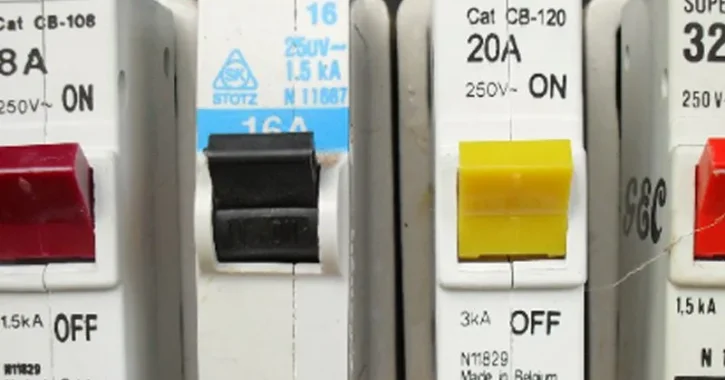
Circuit breakers trip and fuses blow when a circuit draws more current than it can safely carry, when wiring faults create a short or ground fault, or when loose connections create dangerous heat (arcing). These devices are safety equipment: they interrupt power so wires and appliances do not overheat and start a fire. In Chicago homes, the fix is rarely “just reset and ignore.” You need to clear the overload, find the fault, or upgrade capacity before the same breaker trips again.
Why Do Circuit Breakers Trip?
A breaker trips when heat or fault current inside the device reaches its design limit. That heat usually comes from one of four conditions: overload, short circuit, ground fault, or a failing breaker. Understanding which one you have changes what you do next.
Overloads are the most common call we see in Chicago bungalows and two-flats where a single 15A or 20A kitchen circuit feeds a microwave, toaster, air fryer, and fridge through a strip. Short circuits and ground faults are less common but more urgent because they can spark, shock, or burn insulation.
Overload: Too Many Amps on One Circuit
An overload happens when the continuous load on a branch circuit exceeds the breaker rating. The breaker heats up and opens. Typical signs: the trip happens after several appliances run together, lights may dim first, and resetting works until you plug the same loads back in.
Quick checks before you call: unplug portable heaters, space heaters, and high-draw kitchen tools on that circuit, then reset once. If the breaker holds with light load and trips only when the microwave or vacuum starts, you likely need a dedicated circuit or a panel capacity review. For warning signs and load patterns, see our overloaded circuits guide. Practical fixes live on solutions for overloaded circuits.
Short Circuit: Hot and Neutral Touch
A short circuit is a direct path between hot and neutral (or another hot) with almost no resistance. Current spikes, the breaker trips instantly, and you may smell burnt plastic or see a scorch mark at an outlet or junction. Do not keep resetting a breaker that trips with nothing plugged in.
Common Chicago causes include pinched Romex in remodel walls, damaged appliance cords, failed receptacles, and loose wirenuts in boxes. A licensed electrician should open the circuit, isolate the fault, and repair before the circuit returns to service.
Ground Fault: Current Leaving the Intended Path
A ground fault occurs when current leaks to ground through a person, wet surface, damaged insulation, or metal box. GFCI devices are designed to open fast in kitchens, baths, garages, unfinished basements, and outdoors. If a GFCI will not reset, treat that as a wet-location or insulation problem, not a nuisance.
After basement seepage or storm water near outdoor receptacles, test GFCIs and keep wet circuits off until inspected. Persistent ground-fault trips often point to failed outdoor lighting, sump-pump cords, or damaged garage tools.
Arcing and Loose Connections
Arcing happens when current jumps a gap at a loose lug, backstabbed receptacle, or damaged conductor. AFCI breakers trip on dangerous arc signatures. Warning signs include buzzing outlets, warm switch plates, flickering lights on one circuit, and a fishy or burning odor near the panel.
Never “solve” arcing by installing a larger breaker on the same wire. That removes protection and raises fire risk. Panel heat, buzzing, or repeated AFCI trips need professional diagnosis. Context on panels: electrical panel safety and upgrades.
Why Do Fuses Blow?
A fuse blows when its internal metal link melts under overload or fault current. Older Chicago homes that still use fuse boxes behave the same way as breaker panels: the fuse opens to protect the wire. Replacing a blown fuse with a higher-amp fuse is a common and dangerous DIY mistake.
If the same fuse blows repeatedly, the circuit still has an overload or short. Replace only with the correct amp rating and style listed on the fuse holder, then find the cause. Many fuse panels also need a full service evaluation when you add air conditioning, EV charging, or a finished basement.
How to Reset a Tripped Breaker Safely
Turn off or unplug major loads on the affected circuit. At the panel, move the tripped breaker fully to OFF, then firmly to ON. Reset once. If it trips again immediately, leave it off and call an electrician.
Do not hold the breaker in the ON position against a trip. Do not swap in a higher-amp breaker without upgrading the wire. Do not ignore trips that return under normal use. Label the circuit after you identify which rooms went dark.
When a Tripping Breaker Means You Need an Upgrade
Recurring trips under normal appliance use often mean the home outgrew its branch circuits or main service. Finished basements, induction ranges, Level 2 EV chargers, and central air all raise demand. A licensed electrician can measure loads, correct shared neutrals, and plan dedicated circuits or a service upgrade.
For ampacity and service work in Chicago, start with our electrical service upgrade overview. Breaker types and fuse-box basics are covered on circuit breakers and fuse boxes.
FAQ: Circuit Breakers and Fuses
Is it safe to keep resetting a breaker that trips?
Reset once after clearing loads. Repeated resets without finding the cause can damage the breaker and hide an overload, short, or loose connection that may overheat wiring.
Why does my breaker trip only at night or in winter?
Evening kitchen loads and portable heaters stack amps on the same circuit. Winter space heaters are a frequent overload trigger in older Chicago apartments and unfinished rooms.
Can a bad breaker trip for no reason?
Yes. Breakers wear out, especially after many trips or years of heat. A breaker that trips with no load, feels soft, or will not stay reset should be tested and replaced by a professional.
What is the difference between a trip and a blown fuse?
A breaker opens mechanically and can be reset. A fuse melts and must be replaced. Both protect the circuit; neither should be bypassed or oversized to stop nuisance openings.
Call STS Electric for Repeated Trips or Fuse Failures
STS Electric diagnoses breaker trips, fuse failures, overloaded kitchens, and panel problems in Chicago homes and light commercial spaces. Call (773) 721-1111 if a breaker will not stay on, you smell burning near the panel, or the same fuse blows more than once. For urgent outages after storms or water near equipment, use our 24×7 emergency electrical service.




