


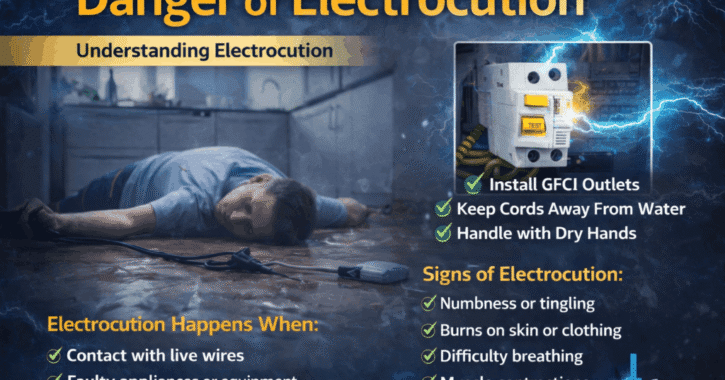
Electrocution is electrical current passing through the body with enough energy to injure or kill. In Chicago homes that risk shows up around wet rooms, damaged cords, open panels, and outdoor work near service drops. Seconds matter: shut power off if you can do it safely, call 911 for serious contact, and never grab a person who is still on a live circuit.
Everyday prevention tips live on our electrical safety hub. Downed-line and fire emergencies are covered on electrical fire and power line response. Use this page for electrocution mechanics, first response, and home hazards that cause fatal shocks.
How Electrocution Happens
Current needs a path. If your body bridges a hot conductor and ground (or another potential), muscles can lock, the heart can fibrillate, and internal burns can form along the path. Severity depends on amperage, voltage, path through the chest, and how long contact lasts. Household 120 V circuits still kill when skin is wet or when a person cannot let go.
Common contact points include frayed appliance cords, missing outlet covers, energized metal boxes with failed grounds, ladders near overhead service, and tools used in standing water. Children are at special risk from open receptacles and dangling cords. Wet kitchens, baths, and laundry rooms raise conductivity sharply.
Wet Locations and GFCI Protection
Water lowers skin resistance. That is why bathrooms, kitchens, garages, unfinished basements, and outdoor receptacles need GFCI protection that trips when current leaks to ground. A GFCI will not fix every shock path, but it cuts many ground-fault events fast enough to prevent electrocution.
If a GFCI will not reset, or trips with every load, stop using that circuit and have it inspected. Placement rules and near-water outlet guidance are on our outlets near water sources page. Do not defeat a GFCI by swapping it for a plain receptacle.
Warning Signs Before a Shock Event
Tingling from a switch or appliance shell, sparks at plugs, warm cords, buzzing metal boxes, and breakers that trip under light loads all point to faults that can escalate. Discolored outlets and melting plug faces mean heat at a connection. Treat those as stop-use conditions until an electrician diagnoses the circuit.
After storms, assume outdoor equipment and flood-affected receptacles are unsafe until dried and tested. Never enter a flooded basement to flip breakers while standing in water.
First Response If Someone Is Being Shocked
Do not touch the person while they remain in contact with electricity. Shut power at the breaker or unplug the source only if you can reach it without becoming a second victim. From a dry position, a nonconductive object such as a dry wooden broom handle may push a cord away in some low-voltage household cases, but never try that on outdoor lines or unknown sources.
Call 911 for loss of consciousness, chest pain, difficulty breathing, burns, or any high-voltage contact. Start CPR only if you are trained and the scene is safe. For electrical burns, cool with clean running water, cover with a dry sterile dressing, and avoid butter, ice, or ointments. Even mild household shocks can cause delayed heart rhythm problems, so medical evaluation is wise.
Outdoor Lines and Service Equipment
Stay far from downed wires. Utility conductors can energize fences, puddles, and vehicles. Keep others back and call emergency services and the utility. Homeowners should not attempt panel work with the cover off or meter equipment exposed. Mast and service issues belong with licensed electricians and ComEd procedures, not DIY.
Ladders, paint poles, and tree work near the service drop are recurring Chicago electrocution scenarios. Look up before you raise anything conductive.
Workplace and Remodel Risks
Remodels open live cables in walls and ceilings. Temporary power and extension cords create trip and contact hazards. Lockout and verify dead before cutting or splicing. Commercial site rules are stricter; see our workplace safety guidance when crews share energized spaces.
DIY panel torque and live testing are common ways homeowners get shocked. If a job requires opening the panel, stop and hire a licensed electrician.
How STS Electric Reduces Electrocution Risk
We repair damaged receptacles and cords at the circuit level, install and test GFCI and AFCI devices where required, correct grounding and bonding problems, and make emergency calls when wiring is unsafe to leave energized. Work is permitted when the scope requires it.
For urgent hazards call 24×7 emergency service or (773) 721-1111. Schedule planned corrections through licensed residential electrician services from 939 W North Ave #746.
FAQ: Electrocution Risks
Can 120 volts kill you?
Yes. Wet skin, a path through the chest, and inability to let go make household voltage deadly. Never assume a circuit is safe because it is only 120 V.
What should I do after a mild shock?
Shut off the source if safe, note any burns or heart symptoms, and seek medical care if you feel unwell. Have the circuit inspected before reuse.
Does a GFCI replace careful habits?
No. GFCIs reduce ground-fault risk but do not protect against every contact path. Dry hands, intact cords, and professional repairs still matter.
Is it safe to pull someone off a live wire?
No. You can become a second victim. Cut power first or keep distance and call 911 for outdoor or unknown sources.




