


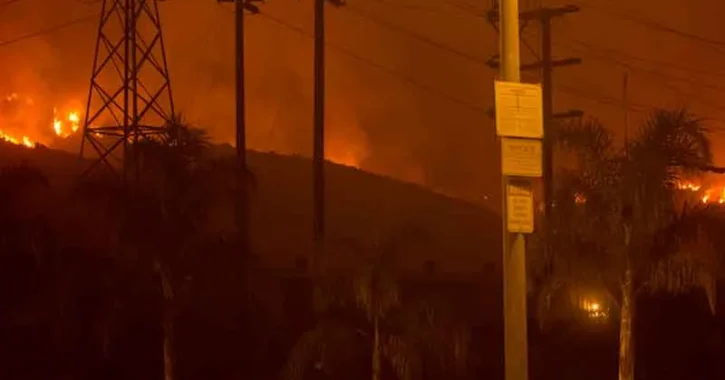
Electrical fires and downed power lines are two of the highest-risk electrical emergencies Chicago homeowners face. Frayed wiring, overloaded circuits, and damaged service equipment can start fires inside the house. Storm-downed utility lines can energize fences, trees, puddles, and roofs outside. This page covers what to do in the moment, what causes these events, and when to call ComEd versus a licensed electrician.
Prevention habits and warning signs live on our electrical fire prevention guide. Daily safety practices belong on the electrical safety tips hub. Use this page for emergency response and power-line hazards.
If an Electrical Fire Starts Indoors
Get everyone out of the building first. Do not stop for belongings. Call 911 from outside. If you can reach the main breaker without walking through smoke or heat, shut it off. Never throw water on an energized electrical fire.
A Class C extinguisher is for energized electrical equipment. Only use one if the fire is small, you have a clear exit, and you have been trained. If the fire grows or smoke fills the space, leave and wait for the fire department.
After firefighters clear the scene, do not restore power yourself. Charred panels, melted outlets, and heat-damaged feeders can remain hazardous even when flames are out. A licensed electrician must inspect and repair before you re-energize.
Common Causes of Electrical Fires in Chicago Homes
Overloaded circuits, extension cords used as permanent wiring, damaged cords, loose connections, and outdated panels are frequent indoor causes. Kitchen and laundry circuits that trip often are early warnings, not nuisances to ignore.
Water intrusion into outdoor receptacles, meter sockets, and unfinished basement wiring raises fire and shock risk after Chicago storms. Warm outlets, burning smells, and scorch marks mean cut power to that circuit and call for service. Overload patterns are covered on our overloaded circuits page.
Downed Power Lines After Storms
Utility power lines can fall across alleys, sidewalks, and yards during wind and ice events. Assume every downed line is live. Stay at least 35 feet away. Keep children and pets inside. Do not drive over a line or try to move it with a stick, broom, or rope.
Report downed lines to ComEd and call 911 if the line is sparking, blocking a road, or contacting a building. Do not enter a yard or porch that a line is touching until the utility clears the scene. Trees, fences, and wet ground can carry voltage far from the visible wire.
Shock and contact risks are explained further on our danger of electrocution guide. Outside the meter and service drop, the utility owns the line. Inside and at the service equipment on your side, a licensed electrician repairs damage after the utility makes the area safe.
Service Entrance, Mast, and Meter Damage
Storms and vehicle strikes can bend masts, crack meter sockets, and loosen grounding. Inside, water can enter panels and produce arcing. After any line contact or service damage, wait for ComEd clearance, then have an electrician inspect the mast, meter enclosure, grounding electrode system, and panel.
Do not reset breakers repeatedly after a surge or outage that left a burning smell. Cut power if you can do so safely, leave the area, and call emergency electrical service. Temporary generators must be installed with correct transfer equipment so utility workers are not backfed.
What Homeowners Should Not Do
Do not open the panel cover during a fire or after smoke damage. Do not splice burned wiring with tape and hope it holds. Do not approach a downed line to take photos up close. Do not tell neighbors it is safe to walk a wet alley where a line fell until the utility confirms clearance.
DIY meter and service work is not a Chicago homeowner project. Unpermitted repairs create liability for the next sale inspection and for insurance claims after a fire.
If neighbors lose power on the same block, report the outage to ComEd first. If only your house is dark and the main breaker will not stay on, treat it as a customer-side fault and call a licensed electrician after you confirm the area is safe.
When to Call STS Electric
Call after the fire department or utility clears the scene if you need panel inspection, service mast repair, meter-socket evaluation, burned circuit replacement, or restoration planning. For after-hours outages and burning smells at the panel, use 24/7 emergency electrical repair in Chicago.
STS Electric serves Chicago homes and light commercial sites from 939 W North Ave #746. Call (773) 721-1111 for inspection-ready repairs after fire, surge, or storm damage.
FAQ: Electrical Fires and Power Lines
Should I throw water on an electrical fire?
No. Water can spread current and increase shock risk. Evacuate, call 911, and only use a Class C extinguisher on a small fire if you have a clear exit.
How far should I stay from a downed power line?
Stay at least 35 feet away. Assume the line is live. Call ComEd and 911 if people or traffic are at risk.
Who fixes a downed line versus home wiring?
The utility handles the overhead or underground line to the service point. A licensed electrician repairs customer-side equipment such as the mast, meter socket, grounding, and panel after the utility clears the hazard.
Can I turn power back on after a small electrical fire?
Not until a licensed electrician inspects heat-damaged wiring and equipment. Flames out does not mean the system is safe to re-energize.




