


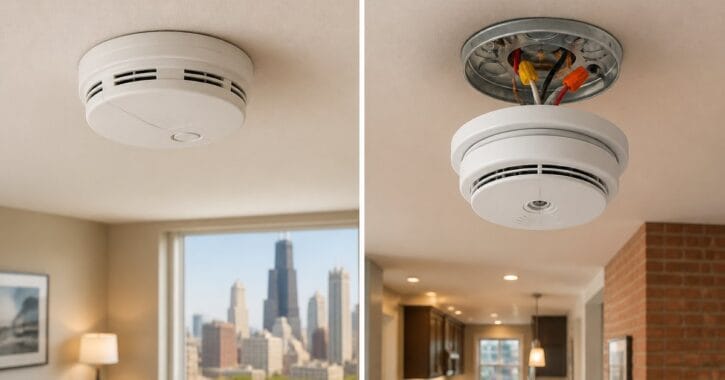
Choosing between battery and hardwired smoke detectors is one of the most common questions Chicago homeowners ask before a remodel, a home sale, or after a chirping unit wakes the household. Both types can save lives when installed correctly, but they differ in power source, interconnect options, maintenance, and how inspectors view them during permitted work. This guide compares the two approaches so you can decide what fits your bungalow, two-flat, or condo.
How Battery-Only Detectors Work
Battery-powered smoke alarms are self-contained. A 9-volt, AA pack, or sealed lithium battery supplies all power. Installation is a screw into the ceiling and a test button press. No electrician is required for a straightforward swap in an owner-occupied single-family home, though landlords and associations may still set stricter rules.
Advantages include low upfront cost and zero wiring. Disadvantages are well known: dead batteries disable protection, tenants remove units, and standalone units do not talk to each other unless you buy wireless-interconnect models with paired bases.
How Hardwired Detectors Work
Hardwired smoke detectors connect to 120V household circuits, usually tapped from a lighting circuit or a dedicated branch. A backup battery or sealed pack keeps the alarm alive during outages. A third interconnect conductor links multiple units so one alarm triggers the whole network.
Installation requires turning off circuits, mounting boxes, pulling conductors, and often conduit in Chicago. Permits and inspection apply when new wiring is involved. For professional installation, see our guide to hardwired smoke detector installation.
Side-by-Side Comparison
Power reliability
Hardwired units with fresh backup batteries win on reliability. Battery-only units depend entirely on user maintenance. Studies of residential fires consistently show missing or dead batteries as a factor in failed alarms.
Interconnect
Hardwired interconnect is standard on new permitted work in Illinois residential contexts. Battery units need wireless-interconnect models (often costlier per unit) to achieve similar whole-home alerting. In a three-story Chicago two-flat, interconnected coverage is critical because a basement furnace fire may not be heard on the top floor without linked alarms.
Maintenance
Both types need monthly testing. Battery-only units need periodic battery replacement; sealed 10-year battery units reduce that chore but must be replaced entirely at end of life. Hardwired units still need backup battery replacement on a schedule, but primary power reduces total dependence on batteries.
Cost
Retail battery units cost less per device than a hardwired install that includes electrician labor, permit fees, and conduit. We do not publish flat prices because every Chicago layout differs. A hallway-only battery refresh is not comparable to a full hardwired retrofit across four bedrooms and a basement. Get a site-specific quote after a walkthrough.
Code and resale
When permitted remodeling triggers inspection, hardwired interconnected alarms are typically expected in required locations. Home inspectors and buyers notice missing or outdated detectors. Upgrading before listing avoids last-minute scramble.
When Battery Detectors Still Make Sense
Battery units are reasonable as temporary protection, in detached sheds without power, or where local rules allow them in existing construction that is not undergoing work. Wireless-interconnect battery models can bridge a garage to the house when running conduit is impractical.
They are a poor long-term sole strategy in large Chicago homes where sleeping areas are far apart and maintenance history is uncertain.
When Hardwired Detectors Are the Better Choice
Choose hardwired when you are finishing a basement, opening walls for kitchen remodels, upgrading a panel, or correcting failed inspections. Landlords who want tamper-resistant, interconnected coverage across units should hardwire common hallways and unit entries where feasible.
Homes with elderly residents, young children, or rental tenants benefit from reduced battery-neglect risk. If you already need an electrician for other work, marginal cost of pulling detector circuits drops.
Carbon Monoxide: Same Conversation
CO detection follows parallel logic. Plug-in and battery CO alarms work standalone. Hardwired combination units integrate with smoke interconnect when listed for that use. Illinois requires CO alarms in many homes with fuel-burning equipment; placement near sleeping areas matters more than whether the device is battery or hardwired, but interconnect still helps wake everyone.
Chicago-Specific Considerations
Chicago’s conduit requirements and inspection culture mean hardwired installs are not DIY-friendly in many buildings. Multifamily buildings may need landlord coordination for common-area wiring. Condo boards may restrict surface wiring in hallways. A licensed electrician documents methods that pass City inspection.
If your panel or wiring is obsolete, detector upgrades may coincide with safety work covered under our electrical repair service and broader electrical safety guidance.
Hybrid Strategies
Some homes hardwire main floors and use wireless-interconnect battery units in detached garages or attic dormers. Others hardwire hallways and bedrooms during a phased remodel. The goal is full interconnect coverage, not necessarily every device on the same wiring method.
A home electrical inspection clarifies which phases make sense and whether existing wiring can support new locations without overloading lighting circuits.
Common Questions Homeowners Ask
Can I mix brands?
Interconnect compatibility is brand and model specific. Mixing bases from different manufacturers often breaks the signal wire. Standardize on one series during retrofits.
Do I need an electrician to replace a hardwired unit?
Like-for-like swap on an existing compatible base is sometimes a homeowner task if power is off and connections match. New boxes, new circuits, or unfamiliar wiring should involve a licensed electrician.
What about 10-year sealed battery alarms?
They reduce maintenance but do not provide interconnect unless you buy wireless-interconnect versions. They suit additions where wiring is impractical, not whole-home strategy in multifamily Chicago buildings.
Which is louder during false alarms?
Decibel ratings are similar when units are listed to the same standard. Hardwired interconnect means every linked device sounds together, which is intentional for real events but noticeable during burnt toast. Photoelectric models reduce kitchen nuisance trips compared to older ionization-only battery units.
Timeline: Battery Today vs Hardwired Next Month
Homeowners sometimes install battery units immediately while scheduling hardwired work after a remodel permit. That can work as a bridge if battery locations match future hardwired plans. Avoid buying dozens of battery units you will discard six months later; instead map the final layout with an electrician first.
Chicago sellers often discover detector gaps during buyer inspections. Addressing hardwired interconnect before listing reduces negotiation delays even when municipal code did not force an upgrade earlier.
Whichever path you choose, test alarms after installation and keep a written log for rental units. Documentation matters as much as hardware selection for long-term safety.
Fire Prevention Beyond the Detector Choice
Alarm type does not fix overloaded outlets, damaged cords, or outdated panels. Review our electrical fire prevention guidance alongside detector decisions so you address ignition sources and alerting together.
Make the Right Choice for Your Home
Battery detectors are fast and cheap for small spaces. Hardwired interconnected detectors are the durable standard for Chicago homes undergoing work, multifamily rentals, and anyone who wants protection that does not depend on remembering batteries.
STS Electric helps homeowners compare options on site, pull permits when required, and install listed hardware correctly. Call (773) 721-1111. Visit us at 939 W North Ave #746, Chicago, IL.




