


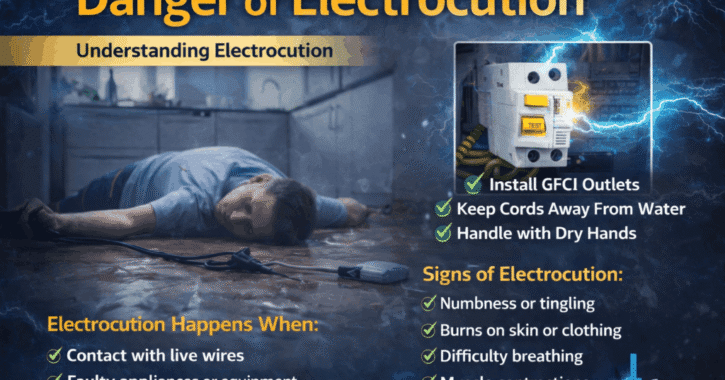
Understanding Electrocution
Electrocution occurs when the human body comes into contact with electricity, causing injury or even death. Water is highly conductive, which makes kitchens, bathrooms, laundry areas, and outdoor spaces particularly risky. A minor mistake around electricity in these areas can have severe consequences.
Ground Fault Circuit Interrupters (GFCI) are designed to immediately cut off power during faults, significantly reducing the risk of electrocution. Always handle electrical devices with dry hands and keep cords away from sinks, wet floors, or bathtubs. Regularly check your home’s wiring for wear and tear, as old or exposed wires can lead to dangerous shocks.
How Electrocution Happens
Electrocution happens when electricity passes through the body, usually via contact with live wires, appliances, or faulty equipment. The severity depends on the voltage, current path, and duration:
- Low voltage shocks: Tingling sensations or minor burns.
- High voltage shocks: May damage the heart, muscles, nerves, or even be fatal.
- Lightning strikes: A natural source of electrocution that can be deadly even from a distance.
- Faulty appliances: Broken cords or defective installations are high-risk factors.
Learn more about electrical hazards from OSHA: OSHA Electrical Safety
Recognizing Signs of Electrocution
Immediate recognition can save lives. Signs of electrocution include:
- Numbness or tingling in hands or feet
- Muscle contractions or spasms
- Burns on skin or clothing
- Difficulty breathing or irregular heartbeat
- Lightheadedness, drowsiness, or fainting
First Aid for Electrocution
Safety is critical before helping:
- Do not touch the person if they are still in contact with electricity. Maintain at least 20 feet of distance.
- Only move them if there is an immediate danger.
- For electrical burns:
- Rinse with running water for 10–20 minutes
- Avoid ice, butter, or ointments
- Cover with a clean, dry cloth or sterile dressing
- Seek medical attention immediately, even for minor burns.
- Monitor for shock signs such as rapid heartbeat, pale skin, or disorientation.
More guidance from the American Red Cross: Electrical Burn First Aid
Preventing Electrocution at Home
Most accidents can be prevented with simple measures:
- Store cords and appliances in dry areas
- Turn off devices when not in use
- Install GFCI outlets in bathrooms, kitchens, and outdoors
- Avoid overloading outlets
- Keep electrical devices away from children and pets
- Replace frayed or broken cords immediately
Electrical Safety in the Workplace
- Wear protective gloves, boots, and helmets
- Avoid loose clothing near machinery
- Follow workplace safety procedures
- Keep the work area clean to reduce hazards
- Report damaged wires or equipment promptly
- Ensure machines have accessible emergency shut-off switches
Check OSHA workplace safety guidelines: OSHA Electrical Safety at Work
Lightning Safety
Lightning can cause electrocution even if it strikes at a distance:
- Stay indoors during thunderstorms
- Avoid electrical appliances, plumbing, and landline phones
- Stay away from windows, doors, and metallic objects
If caught outside:
- Avoid tall objects like trees or poles
- Stay clear of metal fences
- Minimize contact with the ground by squatting with feet close together
Safe Use of Electrical Equipment
- Turn off machines before cleaning, repairing, or leaving
- Follow manufacturer instructions
- Never use frayed cords or broken equipment
- Regularly inspect appliances for wear or damage
Safe extension cord use:
- Match cords to the appliance’s power requirements
- Avoid running cords under rugs or furniture
- Never use damaged or multiple extension cords together
- Unplug cords when not in use
Reporting Electrical Hazards
- Report exposed wires, sparks, or damaged equipment
- Avoid attempting high-voltage repairs
- Secure unsafe areas until fixed
- Maintain a log of hazards at home or work
Emergency Preparedness
- Keep a well-stocked first aid kit
- Learn basic CPR and first aid
- Display emergency contacts prominently
- Train family or co-workers in electrical safety
- Develop an emergency plan for electrical fires or shocks
Child Safety and Electrocution Prevention
Children are naturally curious and at high risk:
- Install childproof outlet covers
- Keep cords and appliances out of reach
- Educate children about not touching outlets or devices with wet hands
- Supervise children near electrical sources
Reference for child electrical safety: Safe Kids Electrical Safety
Our Services
- 24×7 Emergency Service
- Electrical Services
- Electrical Repair
- Electric Vehicle Charging Stations
- Lighting Services
- Thermal Imaging Surveys
- Integrated Security Services
- General Contracting Services
- UPS & Power Backup Systems Services
- HVAC Service
- Plumbing Service
Conclusion:
Electrocution is a preventable but serious hazard. By following safety measures at home, work, and outdoors, recognizing early signs, and knowing proper first aid, you can significantly reduce the risk of injury or death.


