


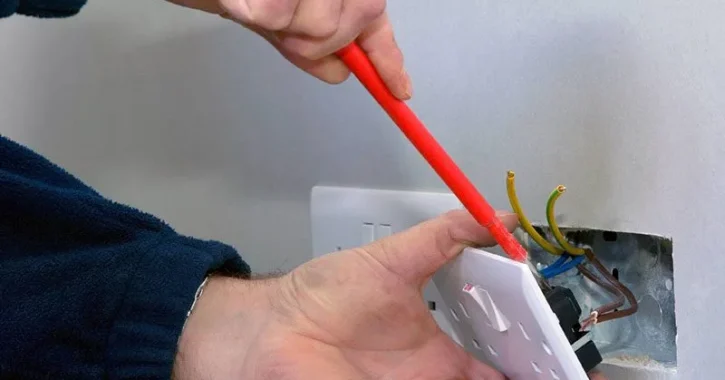
Loose electrical connections are device and splice joints that no longer clamp copper or aluminum with low resistance. Heat, vibration, and expansion cycles back screws off. Backstab outlets lose spring tension. The result is flicker, warm covers, arcing, and fire risk in Chicago homes.
This spoke covers loose device terminals and junction splices. For the full failure map, start at the wire connection issues hub. Breaker lug torque problems belong on free connections on circuit breaker terminals. Stacking two conductors under one screw is a different code failure on two or more wires under one screw terminal.
Why Connections Loosen After Install Day
Every load cycle warms and cools the conductor. Metal expands and contracts. A screw that felt tight on install day can back off after years of laundry-room vibration, HVAC starts, or aluminum branch wire that moves more than copper.
Push-in backstab receptacles fail early because the spring contact area is small. Side-screw and clamp-style terminals hold better when torque and wire size match the listing. Insulation trapped under a screw or too much bare copper past a lug also creates a high-resistance joint that looks “connected” until it arcs.
Corrosion in damp Chicago basements, porch boxes, and flood-damaged panels pits terminals. Remodel crews who reuse old wirenuts without cutting back to clean metal leave oxide in the joint. Time does not forgive that shortcut.
Where Loose Connections Show Up
Receptacles and switches: loose hot, neutral, or ground screws heat the device yoke and cover plate. Junction boxes: wirenuts or lever connectors that were never fully seated open under load. Fixture canopies and appliance cords hide set screws that back out.
Panel landings can be loose too, but under-torqued breaker lugs are covered on the free-terminals spoke. Neutral bar issues and open neutrals belong on the defective-neutral guide. Do not treat every warm panel as a device problem.
Older bungalows and two-flats often stack decades of DIY outlet swaps. Crowded boxes from kitchen remodels leave little working room, so the next install twists a weak pigtail and walks away. That splice fails when a microwave and space heater share the branch.
Symptoms Homeowners Notice First
Flicker or dimming on one circuit when a motor starts. Warm or discolored outlet covers. Buzzing or crackling at a switch. Intermittent dead receptacles that return after someone wiggles a plug. Breakers that trip without a clear overload.
A burning plastic smell near a device is a stop-use signal. Scorch marks, melted plug faces, and heat-damaged wirenuts mean the joint already ran hot. Do not keep resetting a hot breaker. Cut power if you can do so safely and call for service.
Whole-home flicker or multi-circuit odd voltage can mean a service or neutral fault rather than one receptacle. That pattern needs a licensed electrician and sometimes the utility.
Loose Connection vs Double-Tap vs Free Lug
Loose connection: the wire is under the terminal but not clamped hard enough, or a splice has opened. Double-tap: two wires under one screw when the terminal is not listed for two conductors. Free or under-torqued breaker lug: the hot is in the breaker but not torqued to spec.
Mislabeling the failure wastes money. Replacing an outlet will not fix a double-tapped breaker. Torqueing a lug will not fix a burned backstab. Use the hub and sibling spokes to match the repair to the failure mode.
What You Can Check Safely
Note which rooms fail, which breakers trip, and whether heat or smell is present. Unplug loads on the troubled circuit. Reset a clearly labeled breaker once. Keep storage clear of the panel face. Replace a cracked cover only after power is verified off at the breaker.
Do not open a live panel to tighten screws. Do not wrap a loose wirenut with tape as a permanent fix. Do not stack a second wire under a lug to “make room.” Aluminum connectors and burned conductors need listed methods and a licensed electrician.
How Professionals Repair Loose Joints
A licensed electrician de-energizes, verifies dead, and opens devices and junctions methodically. Thermal imaging finds hot spots without guessing. Repairs include cutting back to clean metal, pigtailing with listed connectors, replacing burned devices, and landing conductors to torque specs.
Aluminum branch wire needs listed connectors and often antioxidant compound. After repair, circuits should be tested under load and labels updated. Permits apply when the scope alters permanent wiring under local rules.
Prevention in Chicago Housing Stock
Avoid stuffing high-draw heaters into light-duty circuits. Use listed outdoor covers that stay closed. After a remodel, ask which junctions were opened and how they were closed. Schedule a panel and receptacle survey if you bought an older home and never had the wiring opened.
Catching loose neutrals and backstabs before they arc is cheaper than fire remediation. Pair this spoke with electrical fire prevention when smell or scorch marks already appeared.
How STS Electric Handles Loose Connection Calls
We diagnose device and splice failures, repair with listed methods, and explain whether the issue was one screw or a pattern across the home. Emergency calls for burning smells and sparking devices are prioritized for life safety.
Schedule through licensed residential electrician services or call (773) 721-1111 from 939 W North Ave #746 for Chicago and Cook County homes.
If you already know the failure is a stacked terminal rather than simple looseness, skip to the double-tap spoke linked above. If breakers feel warm at the lug with a single wire, use the free-terminals spoke instead of swapping outlets first.
FAQ: Loose Electrical Connections
Can a loose wire connection cause a fire?
Yes. High resistance creates heat and arcing that can ignite insulation and nearby wood. Treat smell, heat, and scorch marks as emergencies until power is off and the joint is repaired.
Are backstab outlets a common loose-connection source?
Yes. Many fail earlier than side-screw terminals. Electricians often pigtail to screws during repairs for a more reliable joint.
Should I tighten outlet screws myself?
Only if power is verified dead at the breaker and you are replacing a cover or inspecting with the device de-energized. Live work and panel work are not DIY.
Why does flicker happen only when the AC starts?
A weak connection or overloaded shared circuit can dip voltage when a large motor starts. Diagnosis finds whether the fault is at a splice, device, or panel landing.
How is this different from a double-tap?
A double-tap puts two wires under one screw. A loose connection is poor clamp force on the wire that should be there. Different code path, different repair.




