


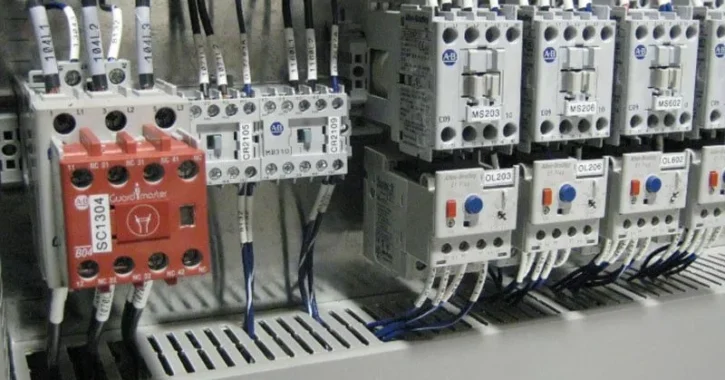
Your home’s electrical framework starts with fundamental administration wires that enter your home from an overhead utility line or underground feeder wires and interface with the principle benefit board, normally situated in a utility space. As yet, the framework equipment has a place with a power service organization. Yet, from the principle benefit board, the current is partitioned into individual branch circuits, every one of which is controlled by a different electrical switch.
Circuit Breakers: The Start of Each Branch Circuit
The principle benefit board is controlled by the fundamental electrical switch that fills in as the essential disengage for the power supply to the primary administration board. This is regularly a 100-to 200-amp two-shaft electrical switch giving flow at 240-volts and feeds it to two 120-volt hot transport bars running down vertically through the board.
Beneath the primary electrical switch, there are two lines of littler circuit breakers, and it is these that shape the start of the individual branch circuits that raced to all regions of your home to give control. These individual breakers will be either 120-volt breakers, taking advantage of just a single of the hot transport bars in the board; or they will be 240-volt breakers that associate with two of the 120-volt transport bars. In this way, your branch circuits will be either 120-volt circuits—which feed all the standard outlets and lighting circuits; or they will be 240-volt circuits—which feed circuits that feed real apparatuses, for example, an electric garments dryer, an electric range, and focal cooling units.
Branch Circuit
Both 120-volt and 240-volt branch circuits can differ in the measure of intensity. Branch circuits for 120-volt circuits are normally 15-amp or 20-amp circuits, although sometimes they will be bigger than that. For 249-volt circuits, the amperage is all the more frequently 30-, 40-, or 50-amps. The imprinting can peruse branch circuit on the switch of each electrical switch.
The wires connected to that circuit should likewise be adequate to deal with the heap of the branch circuit; joining wires that are too little for the circuit amperage represents a distinct threat of flame.
Regularly this isn’t an issue, as the first circuits in your house are likely wired effectively. In any case, whenever a circuit is being broadened, it’s important that the new wiring is the fitting measure for the circuit amperage. It is a typical DIY mix-up to wire with inaccurate check estimate.


