


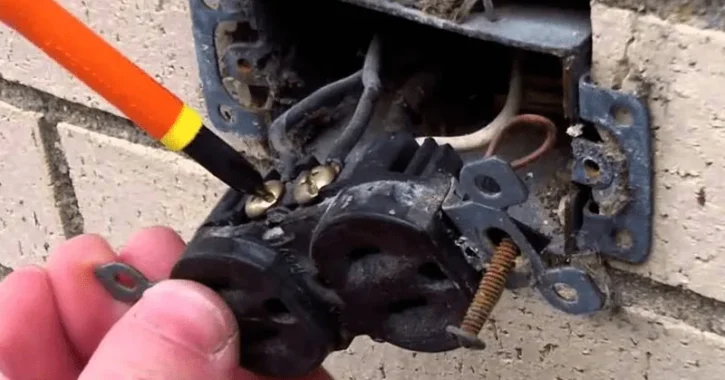
A wall outlet should feel cool and silent. Heat, buzzing, or a burnt smell means something is wrong inside the box loose terminals, failing insulation, or a circuit drawing too much current. Never touch a hot outlet to test it; shut off power and call a professional. Warm outlets often appear alongside other overloaded circuit warning signs.
Why Hot Outlets Are Dangerous
Outlets are designed to carry current without generating noticeable heat. When they run warm or hot, resistance is building somewhere a loose screw on the terminal, aluminum wire without proper compound, or conductors undersized for the load. That resistance converts electricity to heat, which can damage insulation and ignite surrounding material.
Chicago brick two-flats and older bungalows frequently have original devices and back-stabbed connections that loosen over decades of thermal expansion. A warm kitchen outlet above a counter may seem minor until the plastic faceplate discolors or a breaker starts tripping on the same branch.
Common Causes of Hot or Warm Outlets
Loose or damaged connections. Vibration, repeated plugging, and DIY replacements leave wires barely seated. Arcing at the gap produces heat you can feel through the cover plate.
Overloaded circuits. Space heaters, window AC, and kitchen appliances on one 15-amp branch push wiring past its safe continuous load. The outlet is often the first place heat shows up.
Faulty devices. A failing receptacle, damaged cord, or appliance with an internal short can heat the outlet even when the house wiring is sound. Unplug everything on that circuit to isolate the source.
Incorrect installations. Using a standard receptacle where a heavy-duty circuit demands a 20-amp device, or mixing wire gauges, creates chronic overheating. Prior DIY work is a common thread in service calls, see our overview of poor wiring and connection failures for related risks.
What to Do If an Outlet Feels Hot
Stop using the outlet immediately. Unplug connected devices. Go to your panel and switch off the breaker for that circuit, do not simply reset a tripping breaker and walk away. If you smell burning or see scorch marks, keep the circuit off and treat it as an emergency.
Do not attempt to tighten terminals yourself unless you are qualified and certain the circuit is de-energized. A non-contact voltage tester confirms power is off; it does not prove a neutral is safe. Many homeowners create a second fault while fixing the first.
When to Call STS Electric
Schedule same-day service if an outlet is too hot to hold your hand near, if multiple outlets on one circuit run warm, or if breakers trip whenever you use that wall. STS Electric serves Chicago and Cook County 24/7 at (773) 721-1111. A licensed residential electrician can replace failed devices, torque connections to spec, and determine whether the branch needs redistribution or new wiring.




